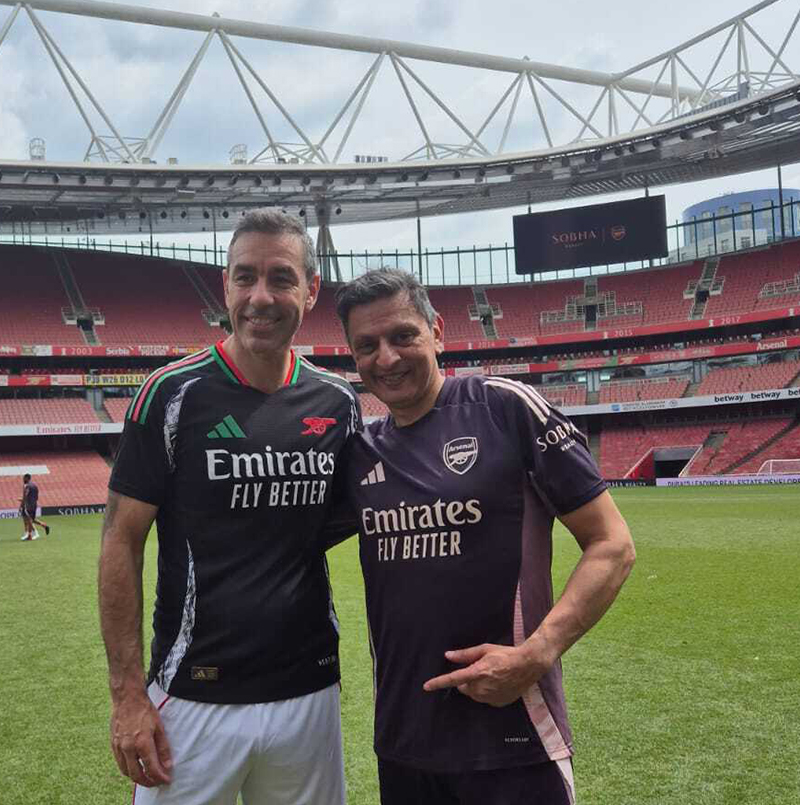
Dr. Zafar "Zaf" Iqbal was the Head of Sports Medicine at Arsenal FC up until June 2026, having joined the club in February 2024. He is a highly respected British Muslim physician of Pakistani heritage and sports medicine consultant with over two decades of experience working at the highest levels of professional football. Dr. Iqbal has established an extensive resume in the English Premier League, working with top-tier clubs, which has included:
He has also been widely praised within the football community for his work ensuring Muslim athletes are supported regarding nutrition, sleep, and fasting during Ramadan.
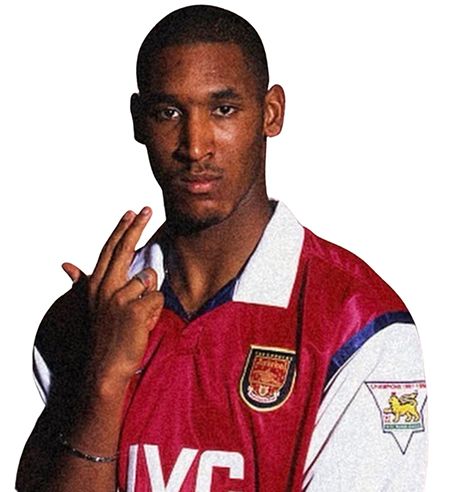
Nicolas Anelka had significant impact at Arsenal despite his short stint at the club. Known for his blistering pace, technical ability, and clinical finishing, Anelka was one of the most exciting young strikers of his generation. He is also the first Muslim player to make a senior appearance for Arsenal!
Anelka joined Arsenal from Paris Saint-Germain in 1997 at just 17 years old. Under the guidance of Arsène Wenger, he quickly rose to prominence, especially during the 1997–98 season, when he played a key role in Arsenal’s Premier League and FA Cup double. His performances earned him the PFA Young Player of the Year award in 1999. However, his time in North London was short-lived, as he secured a high-profile move to Real Madrid that same year for £22.3 million, a then-record transfer fee for Arsenal. However, the funds from his sale allowed Arsenal to build their current training ground and sign Arsenal great Thierry Henry.
Following his departure from Arsenal, Anelka had a nomadic career, playing for Europe’s biggest clubs such as Real Madrid, Paris Saint-Germain, Liverpool (on loan), Manchester City, Chelsea, and Juventus. Although he had a career many dream of, the consensus is that he never fulfilled the massive potential he displayed for the Gunners back when he was highly rated in France over Arsenal legend Thierry Henry at the time.
Rewinding back to his earlier life in France, Anelka grew up in a neighbourhood with a strong North African Muslim community. This could be considered a factor as to why he then reverted to Islam when he was 16 shortly before his move to Arsenal. Furthermore, he publicly embraced his Muslim faith in 2004 adopting the name Abdul-Salam Bilal.
Despite his short tenure at Arsenal, Anelka left a lasting impression. His rise to stardom under Wenger set the template for Arsenal’s later strategy of signing and developing young talents. Though his career was filled with ups and downs, Anelka remains one of the most gifted strikers to have played for Arsenal and a key figure in the history of Muslim footballers in Europe.
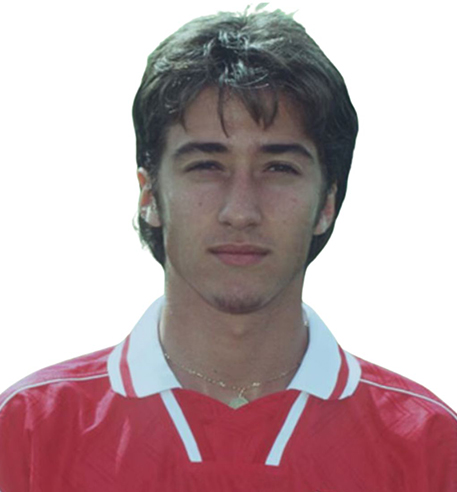
Jehad Muntasser had a brief and largely overlooked spell at Arsenal after being signed from Italian side Pro Sesto in 1997. Though his time in North London was short, he is considered the first Arab to play for Arsenal and the first Arab to play for a Premier League team He made his only senior appearance for Arsenal in a League Cup match against Birmingham City. He was brought on as a substitute in the 119th minute of extra time, as Arsenal secured a 4-1 victory. This fleeting moment marked the extent of his competitive involvement with the first team before he moved on from the club.
Following his departure, Muntasser joined Bristol City, though he failed to make a first-team appearance for the Robins. He subsequently returned to Italy, where he had stints with multiple clubs before eventually concluding his playing career in Libya with Al-Ittihad Tripoli.
While his career at Arsenal was brief, Muntasser’s journey from Italy to England and back again highlights the global reach of football. As a Libyan international, he also contributed to football in his homeland, representing his country at the senior level with the most notable caps residing in the 2006 African Cup of Nations. His time a prestigious club like Arsenal serves as an inspiration for aspiring footballers in Libya. While his Arsenal career may be less celebrated than some, Muntasser's contribution to Libyan football and his connection to Arsenal remain a noteworthy part of his career.
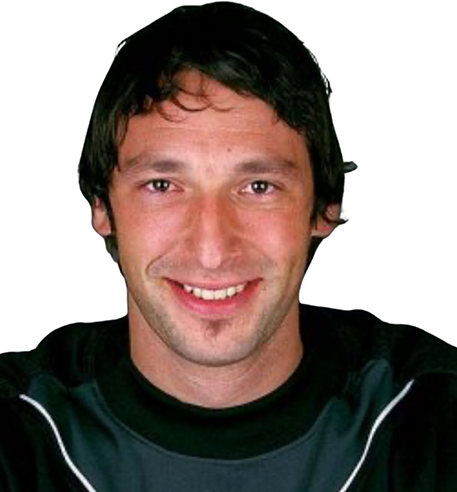
Shabaan joined Arsenal in August 2002 from Swedish club Djurgården, with high hopes of becoming a potential successor to the legendary David Seaman. Despite being tipped for a major role at the club, he struggled to displace Seaman and was mainly used as a backup goalkeeper. Shabaan did, however, make three Premier League appearances for Arsenal (including the North London Derby where he kept a clean sheet in a 3-0 win), in addition to two appearances in the UEFA Champions League against PSV Eindhoven and AS Roma.
His career at Highbury was unfortunately cut short after a severe leg injury in training on Christmas Eve 2002. The injury sidelined Shabaan for the remainder of the 2002–03 season, and by the time he recovered, Jens Lehmann had firmly established himself as Arsenal's No. 1 goalkeeper following Seaman's departure. Following his time at Arsenal, Shabaan had a brief and less impactful spell on loan at West Ham United in 2004, which was followed by a permanent move to Brighton & Hove Albion in 2005. Rami Shabaan also represented his country Sweden from 2006-2008 including an appearance in the 2006 World Cup. Although his Arsenal career was marred by injury he was one of few players of Muslim heritage in the Premier League at the time and his spell at Arsenal remains a noteworthy chapter in the club's history as he enjoyed being part of a squad at the peak of its success.
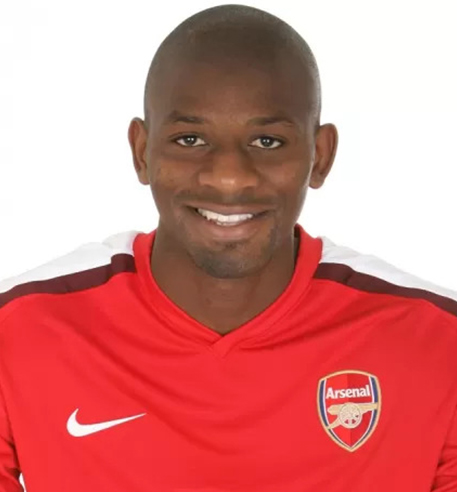
Abou Diaby who, despite a career ravaged by injuries, showed immense talent during his time at Arsenal. Known for his technical ability, vision, and physicality, Diaby was once considered one of the most talented midfielders in Europe at his peak. As a practising Muslim, he became an important figure for young athletes, balancing his faith with a career in professional football.
Diaby joined Arsenal in 2006 from Auxerre and quickly became known for his elegant style of play in midfield. With his ability to break up opposition attacks and drive forward with the ball, Diaby showed flashes of brilliance. He was likened to Invincibles captain Patrick Vieira and had high expectations to fill his boots. However, his career at Arsenal was heavily hindered by recurring injuries, limiting his appearances hence Diaby only managed to make 180 appearances for the club, scoring 19 goals in a 9 year timeframe.
After leaving Arsenal in 2015, Diaby had brief stints with clubs like Olympique de Marseille, but his injury problems continued to impact his career. He eventually retired from professional football due to the ongoing difficulties caused by his injuries. His departure from Arsenal left many Gooners imagining what could’ve been if he managed to stay injury free.
On a lighter note, the French midfielder did not shy away from his religion during his career and highlighted the importance of positive role models in football for young Muslims stating it was his duty to set a good example when speaking to the FA.
Abou Diaby’s legacy at Arsenal is one of unfulfilled potential. Had it not been for the constant injuries, he could have been more influential for the club. Nonetheless, his natural talent and leadership qualities were undeniable.
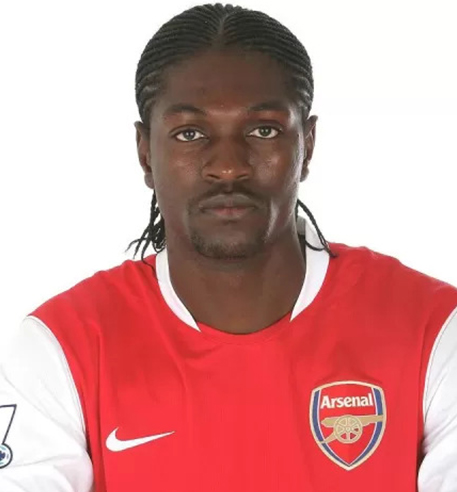
Emmanuel Adebayor made a significant impact at Arsenal with his goal-scoring ability and physical presence. Known for his pace and aerial dominance, he was a key player for Arsenal during the mid-2000s as he became one of the most high-profile African strikers in the Premier League and Europe.
Adebayor joined Arsenal from AS Monaco in January 2006. He quickly became a crucial part of Arsène Wenger’s attack, leading the line with his strength and versatility. His best season came in 2007–08, when he scored 30 goals in all competitions, earning a place in the PFA Team of the Year. Despite his impressive performances, his relationship with Arsenal fans soured after his controversial move to Manchester City in 2009.
After leaving Arsenal, Adebayor played for several top clubs, including Manchester City, Real Madrid (on loan), Tottenham Hotspur, and Crystal Palace. While he continued to score goals, his career was often marked by controversy, including on-field clashes and off-pitch disputes.
Adebayor had a Christian upbringing and was not Muslim during his time at Arsenal but towards the latter stage of his career he reverted to Islam during Ramadan in a video that went viral where he takes the shahada. He’s expressed how the similarities of Christianity and Islam guided him to his decision. Whilst he is now a Muslim he has expressed his appreciation towards Christianity providing a stoic example of following your own religion whilst respecting others.
Emmanuel Adebayor’s legacy extends beyond club football as he became a hero for his country Togo putting them on the map as he represented them on the international stage becoming their all-time top scorer alongside dragging his nation to qualify for the 2006 World Cup. He also won African player of the year in 2008 following his best ever season of football. Perhaps if that move to Manchester City did not materialise his time at Arsenal would have been much more appreciated.
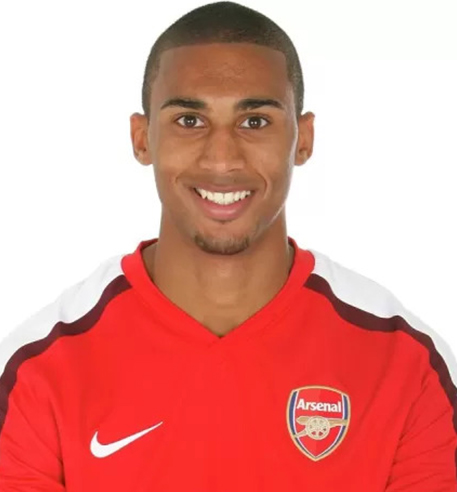
Armand Traoré played as a left-back for Arsenal. Known for his pace and attacking runs, he showed promise at Arsenal but struggled to secure a regular starting role. As a Muslim, Traoré openly spoke about his faith and its influence on his career.
Traoré joined Arsenal’s youth setup in 2005 from Monaco and made his senior debut in 2006. He was primarily used as a backup left-back, competing with Gaël Clichy for a starting spot. Although he showed glimpses of his attacking ability, defensive inconsistencies limited his impact. He was loaned to Portsmouth in 2008–09 and Juventus in 2010–11 before leaving Arsenal permanently. After leaving Arsenal, Traoré played for clubs like Queens Park Rangers, Nottingham Forest, and Cardiff City. Injuries and inconsistent performances prevented him from reaching his full potential.
Traoré has been vocal about the role of Islam in his life. He notably decided to stop wearing extravagant jewellery and focus on a more modest lifestyle, crediting his faith for guiding him. He also bravely opened up about his earlier life consisting of clubbing and getting tattoos revealing that he cut the nightlife out and removed his tattoos. This honesty and humility are admirable, providing a good example for many Muslims.
While Traoré never cemented himself as a key player for Arsenal, he remains part of a generation of Muslim footballers who represented the club in the earlier Premier League era. His career serves as an example of perseverance, even if it did not reach the heights initially expected.
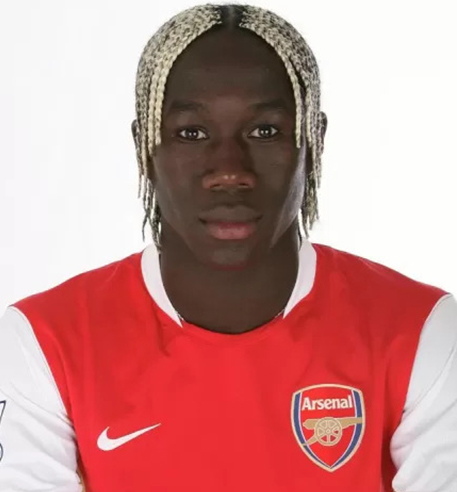
Bacary Sagna was one of the most consistent right-backs in the Premier League during his time at Arsenal. Known for his defensive solidity, work ethic, and pinpoint crossing, Sagna was a key figure in Arsenal’s defence for several seasons. As a devout Muslim, he remained a humble and disciplined presence both on and off the pitch.
Sagna joined Arsenal from Auxerre in 2007 and quickly established himself as the club’s first choice right-back. He was named in the PFA Team of the Year twice (2007–08 and 2010–11) and played a crucial role in Arsenal’s FA Cup-winning campaign in 2014, his final season at the club. After leaving Arsenal, Sagna joined Manchester City (2014–2017), winning the League Cup in 2016. He later had spells at Benevento in Italy and Montreal Impact in MLS before retiring.
Sagna observed his faith diligently throughout his career. His discipline, humility, and strong sense of family values were shaped by his Islamic beliefs. He’s outwardly expressed love for Islam and his gratitude for being Muslim.
Mr Consistent Bacary Sagna is widely regarded as one of Arsenal’s best right-backs of the modern era. His leadership, dedication and commitment to the club made him a fan favourite.
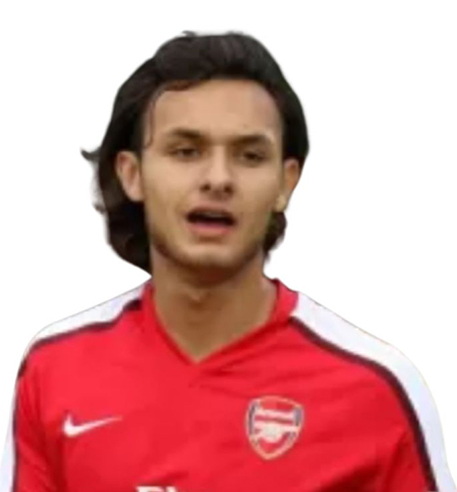
Nacer Barazite played as an attacking midfielder and forward. Known for his technical ability and creativity, he was highly rated in Arsenal’s youth system but never made a senior competitive appearance for the club in the Premier League and Champions League. He remained committed to his faith throughout his career.
Barazite joined Arsenal from Dutch club NEC Nijmegen in 2006 and became a standout performer for the Arsenal Reserves and Academy. He featured in pre-season friendlies and League Cup matches but was unable to break into Arsène Wenger’s first team. After loan spells at Derby County and Vitesse Arnhem, he left for Austria Wien in 2011.
Barazite played for clubs across Europe and Asia, including AS Monaco, Utrecht, Yeni Malatyaspor, and Al Jazira. While he never reached the elite level expected of him, he enjoyed a respectable career in various leagues.
He has done well for himself after hanging up the boots, enjoying life as an entrepreneur owning two businesses, an Islamic bookstore and a home deep cleaning service operating in Dubai. He has also established a presence on social media and hosts a podcast sharing his knowledge to guide young Muslim entrepreneurs. He has also touched on the lows of his football career and how turning to Allah SWT enabled him to bounce back.
Though he never played a senior Premier League game for Arsenal, Barazite remains a notable graduate of Hale End. His technical skills and potential left a lasting impression on fans who followed Arsenal’s youth teams in the late 2000s.
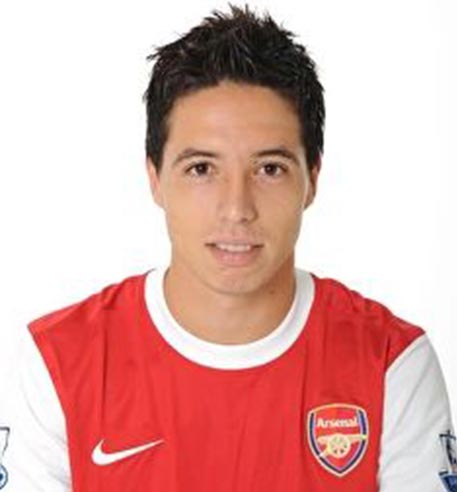
Samir Nasri was an attacking midfielder known for his technical brilliance, dribbling ability, and creativity. Often compared to Zinedine Zidane in his early years, Nasri was a key playmaker for Arsenal before his controversial departure. A practicing Muslim, he balanced his faith with his career at the highest level.
Nasri joined Arsenal from Marseille in 2008 and rapidly became one of the team’s most influential midfielders. His best season came in 2010–11, when he scored 15 goals and was nominated for the PFA Player of the Year award. However, he left for Manchester City in 2011, a move that to this day still angers many Arsenal fans.
Begrudgingly, Nasri’s move to Manchester City proved to be wise in hindsight as he went on to win two Premier League titles (2011–12, 2013–14). He later played for Sevilla, Antalyaspor, and West Ham before retiring in 2021.
Nasri was raised in a Muslim household and often credited his family and faith for keeping him grounded. However, his career was also marked by controversies, including a doping ban and clashes with managers. Post career he has been vocal on the ever debated topic of Muslim players fasting whilst actively playing games. He has also been a keen voice for Muslims even beyond football courageously denouncing a rise in Islamophobia in his country France.
Despite his acrimonious exit, Nasri remains one of Arsenal’s most gifted midfielders of the modern era. His performances in the 2010–11 season were among the best by an Arsenal player in the Emirates era, but his reputation among fans remains mixed due to his move to City.
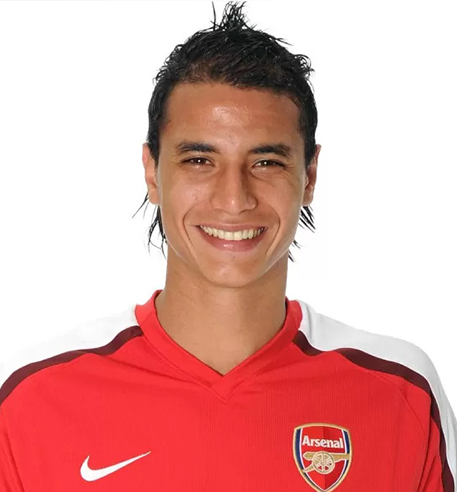
Marouane Chamakh is a former Moroccan professional footballer who played as a striker. Renowned for his heading ability and link-up play, he arrived at Arsenal with high expectations but struggled to maintain his early form. Chamakh is among the most well-known North African players the Premier League has witnessed.
Chamakh joined Arsenal on a free transfer from Bordeaux in 2010, following an impressive career in Ligue 1. He started strongly, scoring 10 goals in his first 21 games, but his form dipped after Robin van Persie’s return from injury. Over three seasons, he made 67 appearances, scoring 14 goals, before leaving in 2013.
After Arsenal, Chamakh had spells at West Ham, Crystal Palace, and Cardiff City, but he never regained his Bordeaux-level consistency. He retired from professional football in 2019. Chamakh was vocal about his Muslim faith, adhering to fasting in the month of Ramadan even during his playing days. His success as a Moroccan international helped raise the profile of North African players in Europe.
Although his Arsenal career was disappointing after a bright start, Chamakh remains one of the first high-profile Moroccan players to have graced the Premier League. His form to begin with showed promise, but inconsistency prevented him from becoming a long-term success.
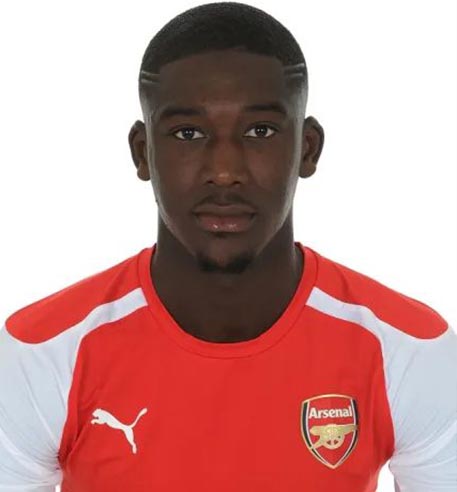
Sanogo joined Arsenal from Auxerre in 2013 on a free transfer as a promising young talent but his time at Arsenal was underwhelming it was hindered by injuries and inconsistency. He showed glimpses of potential; his most famous performance is definitely scoring four goals in a 2014 Emirates Cup match against Benfica but he failed to establish himself in the first team. However, he did leave with silverware as he was part of Arsenal’s FA Cup-winning squad in 2014 before getting loaned out to Crystal Palace, Ajax, and Charlton before leaving the club in 2017. After Arsenal, Sanogo played for Toulouse and Huddersfield Town but once again struggled with injuries and form. He last played professionally in 2021. Sanogo openly practiced Islam and praised his faith for keeping him strong through his struggles with setbacks. Although his Arsenal career didn’t take off as he would’ve wanted, Sanogo’s presence at Arsenal will always be remembered due to his infectious smile and funny personality which radiated to the fans.
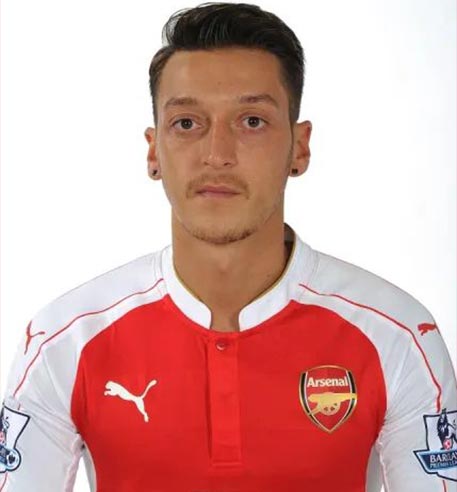
Mesut Özil is undeniably the most high profile Muslim player to wear the red and white shirt and to bless the Premier League with his exceptional vision, exquisite first touch, weight of pass, and technical brilliance. One of the most gifted playmakers of his generation, he was Arsenal’s creative heartbeat for much of his tenure. A devout Muslim, Özil often spoke about the role of his faith in his life and career.
Özil joined Arsenal from Real Madrid in 2013 late into transfer deadline day for a club-record £42.5 million, sending Arsenal fans into euphoria. He instantly became one of the Premier League’s biggest stars. The German Maestro played a key role in Arsenal’s 2014, 2015, and 2017 FA Cup victories, ending the club’s nine-year trophy drought. His best season came in 2015–16, when he registered 19 Premier League assists, narrowly missing Thierry Henry’s record. However, after signing a contract extension in 2018 his later years at Arsenal were overshadowed by dips in form, off-field controversies and a fallout with management, leading to his departure in 2021.
After leaving Arsenal, Özil played for his boyhood club Fenerbahçe and İstanbul Başakşehir before retiring in 2023. He also won the 2014 World Cup with Germany as a linchpin in that team but retired from international football in 2018, citing racism and discrimination.
Özil openly embraced Islam, frequently reciting a dua before a game, observing Ramadan, attending Jummah prayers and embarking on the Umrah pilgrimage. He has been outspoken about humanitarian causes, particularly in relation to fellow Muslims suffering from injustices around the world.
Despite his divisive exit, Özil remains one of Arsenal’s most talented Number 10’s. His elegance, creativity, and impact on the team’s success solidified his place in club history, and he remains an inspiration for Muslim athletes worldwide.
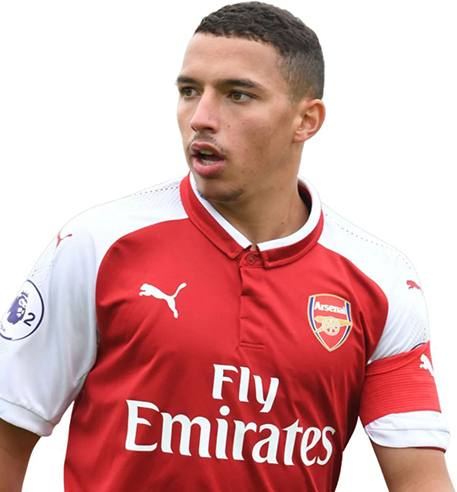
Ismaël Bennacer is an Algerian professional footballer known for his composure, passing, and tactical intelligence. Though his Arsenal career was brief, he later made a name for himself in European football.
Bennacer joined Arsenal from Arles-Avignon in 2015 but managed only one senior appearance—a League Cup match against Sheffield Wednesday. Struggling for game time, he moved to Empoli in 2017, where he developed into a quality midfielder. Moreover, Bennacer starred for AC Milan, winning Serie A in 2021–22, and played a vital role in Algeria’s 2019 AFCON victory, where he was named Player of the Tournament.
As a practicing Muslim, Bennacer has spoken about how Islam keeps him steadfast, he has taken part in Umrah and he observes Ramadan while competing at the highest level.
Though overlooked at Arsenal, Bennacer’s success at Milan and with Algeria shows how talent can flourish in the right environment. He is now one of the top midfielders in Serie A.
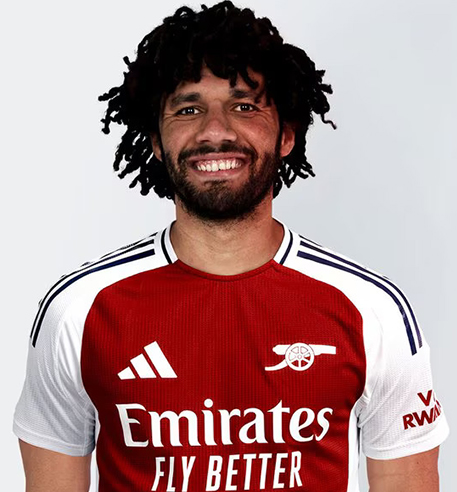
Mohamed Elneny is an Egyptian professional footballer known for his work rate, defensive discipline, and reliability. A key squad player for Arsenal over several seasons, he has also been a pivotal figure for the Egyptian national team alongside Mo Salah. A proud Muslim, he openly practices his faith and remains an influential role model.
Elneny joined Arsenal from FC Basel in 2016 under Arsène Wenger. He quickly became known for his reliable passing, stamina, and tactical awareness. Though not always a first-choice starter, he played an important role in Arsenal’s 2017 FA Cup triumph and 2020 FA Cup & Community Shield victories. He also went on a loan to Turkish side Beşiktaş during the 2019-2020 season. The Egyptian then left the club in 2024 on a free transfer to Emirati side Al Jazira where he currently enjoys his football. Elneny has also been a key player for Egypt, featuring in the 2018 World Cup and multiple AFCON tournaments, helping his nation reach the 2017 and 2022 AFCON finals.
As he heads towards the tail end of his career, Mohamed Elneny has also created his own team ‘Elneny Football Club’ at English grassroots level with dreams and aspirations to one day reach the Premier League.
Elneny is an outspoken Muslim who often shares Islamic messages and his own Quran recitations almost daily through his social media channels. He observes Ramadan while playing and is known for his philanthropy and charity work in Egypt. In addition, just before his Arsenal exit, he opened the first ever multi faith player prayer room at the Emirates Stadium.
Elneny is respected for his professionalism, leadership, and dedication. While not a superstar, his commitment to the club and his faith make him a beloved figure at Arsenal even earning himself his own chant.
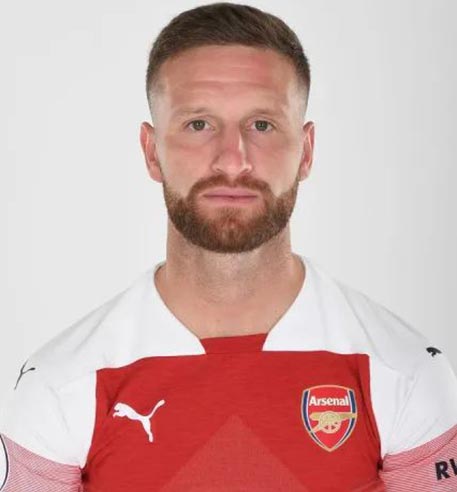
Shkodran Mustafi is a German former professional footballer who played as a centre-back. A 2014 World Cup winner, he joined Arsenal with high expectations but endured a mixed spell at the club.
Mustafi signed from Valencia in 2016 for £35 million and initially impressed with an unbeaten 22-game run. He played a crucial role in Arsenal’s 2017 FA Cup triumph, but errors and inconsistency led to criticism. Injuries and competition saw him phased out before he left in 2021. After Arsenal, Mustafi had a brief stint at Schalke, but injuries hampered his form. He later played for Levante before retiring.
German born to Albanian parents, Mustafi is a practicing Muslim and has discussed how his faith helps him throughout life. He has often been seen making dua before a match and even at his time at Valencia, despite contractual obligations, he nobly refused to promoted alcohol at a press conference resulting in backlash from the Spanish media. With his rocky tenure, Mustafi’s FA Cup win and early contributions are still highlights. His World Cup success remains a major achievement in his career.
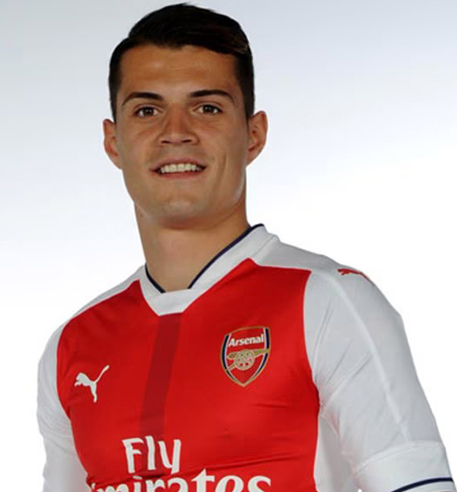
Granit Xhaka is a Swiss professional footballer known for his leadership, tenacity, and passing range. A divisive yet influential figure at Arsenal, he captained the club and played a key role in their midfield for several years. Xhaka comes from an ethnic Albanian family and but has not spoken often on his Muslim heritage, respectfully deciding to keep that part of his life private.
Xhaka joined Arsenal from Borussia Mönchengladbach in 2016 for £35 million. He became a mainstay in midfield, winning the FA Cup in 2017 and 2020. His Arsenal career saw ups and downs, including a controversial fallout with fans in 2019, after which he lost the captaincy. However, under Mikel Arteta, Xhaka redeemed himself, playing a key role in Arsenal’s 2022–23 title challenge before leaving for Bayer Leverkusen where he currently plays. He was an integral part in Leverkusen’s unbeaten, historic and first ever Bundesliga title under coach Xabi Alonso coupled with a DFB Pokal cup victory in 2024.
He remains a key player for the Swiss national team often producing his most stellar football performances as the nation’s captain leading them into multiple Euros and World Cup tournaments.
Despite a turbulent Arsenal career as a hothead often receiving red cards, Xhaka is remembered as a passionate leader who overcame challenges to become one of the club’s most influential midfielders of his era. His redemption story under Arteta earned him respect from fans and teammates alike.
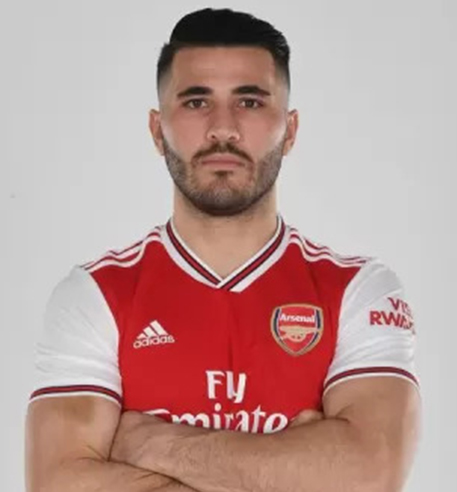
Sead Kolašinac is a Bosnian international footballer known for his brute force, defensive strength, and versatility. A tough, no-nonsense defender, he was a fan favourite at the start of his Arsenal career for his aggressive playing style and forward attacking runs.
Kolašinac joined Arsenal from Schalke 04 in 2017 on a free transfer. He made an instant impact, scoring in the 2017 Community Shield win over Chelsea. He was a regular under Arsène Wenger and Unai Emery, contributing to Arsenal’s 2019 Europa League final run and 2020 FA Cup victory. However, injuries and competition for places saw his role diminish, leading to a loan back to Schalke before departing in 2022.
After leaving Arsenal, Kolašinac joined Marseille, where he became a key defensive figure before moving to Atalanta in 2023. He’s still a mainstay for the Bosnia and Herzegovina national team.
Like many other Muslim footballers, Kolašinac observes Ramadan while competing and completes duas before matches and sometimes shares religious messages on social media. His dedication to his faith and roots has made him an inspirational figure for young Muslim athletes to look up to.
Poor form towards the latter stages of his period at Arsenal saw him fall out of favour with the fans and his first team place. However, known for his strength and warrior mentality, Kolašinac was still a reliable, hard-working defender. His heroic act of defending Mesut Özil from armed attackers in 2019 further cemented his reputation as a fearless loyal teammate and friend.
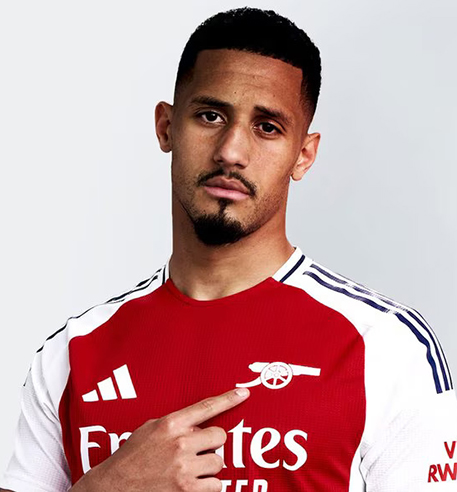
Rolls Royce centre back William Saliba is known for his elegant defending, composure, and aerial ability. One of the most promising young defenders in world football, after a few loan spells his Arsenal career ignited becoming a cornerstone in one of the best defences in Europe. Saliba joined Arsenal in 2019 from Saint-Étienne back when Unai Emery was head coach. His start to Arsenal life was rough as he dealt with the passing of his mother, felt homesick and had to adjust to a new culture accustoming himself to the English language all at the tender age of 19. Consequently he was out on loan for three years in France at St Étienne, OGC Nice and most notoriously Marseille where he flourished as a first team regular earning him the Ligue 1 Young Player of the season in the 2021/22 campaign.
He made his return to Arsenal in 2022 and has never looked back since cementing his place as a key figure in Mikel Arteta’s defence and one of the first names on the team sheet. Saliba has established a solid centre back partnership with Brazilian Gabriel Magalhães and his performances have earned him significant praise as a world-class centre-back. In addition to his Arsenal career, Saliba is an important part of the French national team, earning call-ups at various youth levels and featuring in the competitive senior team featuring at the World Cup 2022 and Euros 2024.
William Saliba is a dedicated Muslim having been spotted offering his Ramadan Tarawih prayers at Colney Masjid involving himself with the local Muslim community. Just like Arsenal Muslim players before him, he often recites a dua just before a match starts.
Saliba grew up as an Arsenal fan with photos of him in the Gunners shirt during his youth surfacing. That is why his unwavering passion to represent the badge, and elite talent has made him widely loved by the fanbase. Still early in his career, Saliba’s potential is immense. Saliba’s rise at Arsenal despite initial hurdles reflects on his strong mentality and the club’s commitment to developing young talent. The combination of technical ability and maturity has made him one of the most exciting defensive talents in world football.
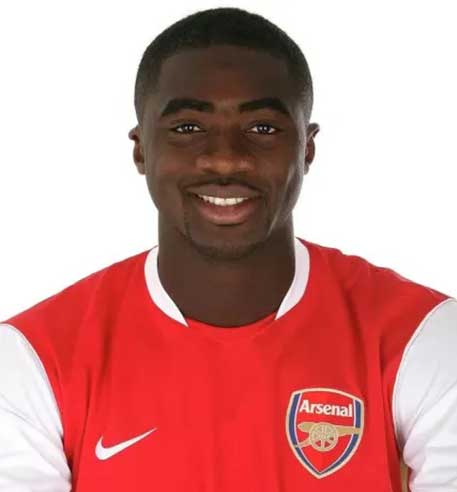
Kolo Touré became one of the most iconic defenders in Arsenal’s history. Known for his pace, strength, and leadership, Touré was a cornerstone of Arsène Wenger’s "Invincibles" team that went unbeaten in the 2003–04 Premier League season. As one of the first prominent African Muslim players in the Premier League, Touré also represented a new wave of diversity in English football.
Touré joined Arsenal in 2002 from ASEC Mimosas in his native Ivory Coast. A product of Wenger’s keen eye for talent, Touré quickly established himself as a key player in the team’s defence, forming a formidable partnership with Sol Campbell. His incredible work rate, defensive solidity, and ability to drive forward with the ball were instrumental in Arsenal’s success, especially during the unbeaten 2003–04 season where he played all but one game. Touré made over 326 appearances for Arsenal over seven years, winning two FA Cups, two Community Shields and one Premier League title.
After leaving Arsenal in 2009, Touré went on to play for Manchester City, Liverpool, and Celtic. Since retiring he’s launched a career in coaching having managed Wigan Athletic then joined Leicester City as part of the first team coach backroom staff to now a similar role in Manchester City’s academy set up.
Touré is a devout Muslim, and his faith has been a key aspect of his identity both on and off the pitch. Known for his humility and generosity, he became an inspiration to many young Muslim athletes, showing that professional success and faith can coexist. He has been open about speaking on topics revolving around Muslim footballers especially on the importance and impacts of Ramadan on Muslim players.
Kolo Touré’s legacy at Arsenal is defined by his role in the club's most successful era, particularly the unbeaten league season. As one of the first high-profile Muslim footballers in the Premier League, he broke new ground for African players and Muslim athletes in English football. Touré remains a beloved figure in the football world, known not just for his defensive prowess, but also for his character, leadership, and contributions to the global representation of Muslim players in the sport.
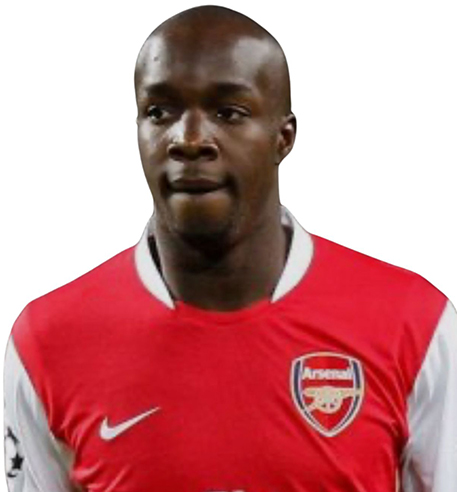
Lassana Diarra is a French former professional footballer who played as a defensive midfielder. Despite a brief stint at Arsenal, he was widely regarded as a talented and tenacious midfielder.
Diarra joined Arsenal from Chelsea in 2007 but struggled for regular game time due to competition from Cesc Fàbregas, Gilberto Silva, and Mathieu Flamini. He made only 13 appearances before leaving for Portsmouth in January 2008, where he won the FA Cup later that year.
After Arsenal, Diarra played for Real Madrid, Paris Saint-Germain, and several other clubs, enjoying a successful career, particularly in Spain and France. He earned 34 caps for France and played at Euro 2008.
Although his time at Arsenal was short, Diarra went on to have a respectable career at some of Europe’s biggest clubs. His most memorable time England would be during his two years at Chelsea where he won the league prior to his switch to Arsenal. His versatility and strong work ethic made him a valued player wherever he played.
Here is what others say about us

Join Arsenal Muslim supporters' community, united by a shared passion for the team.

Independent voice for
Muslim supporters of
Arsenal Football Club